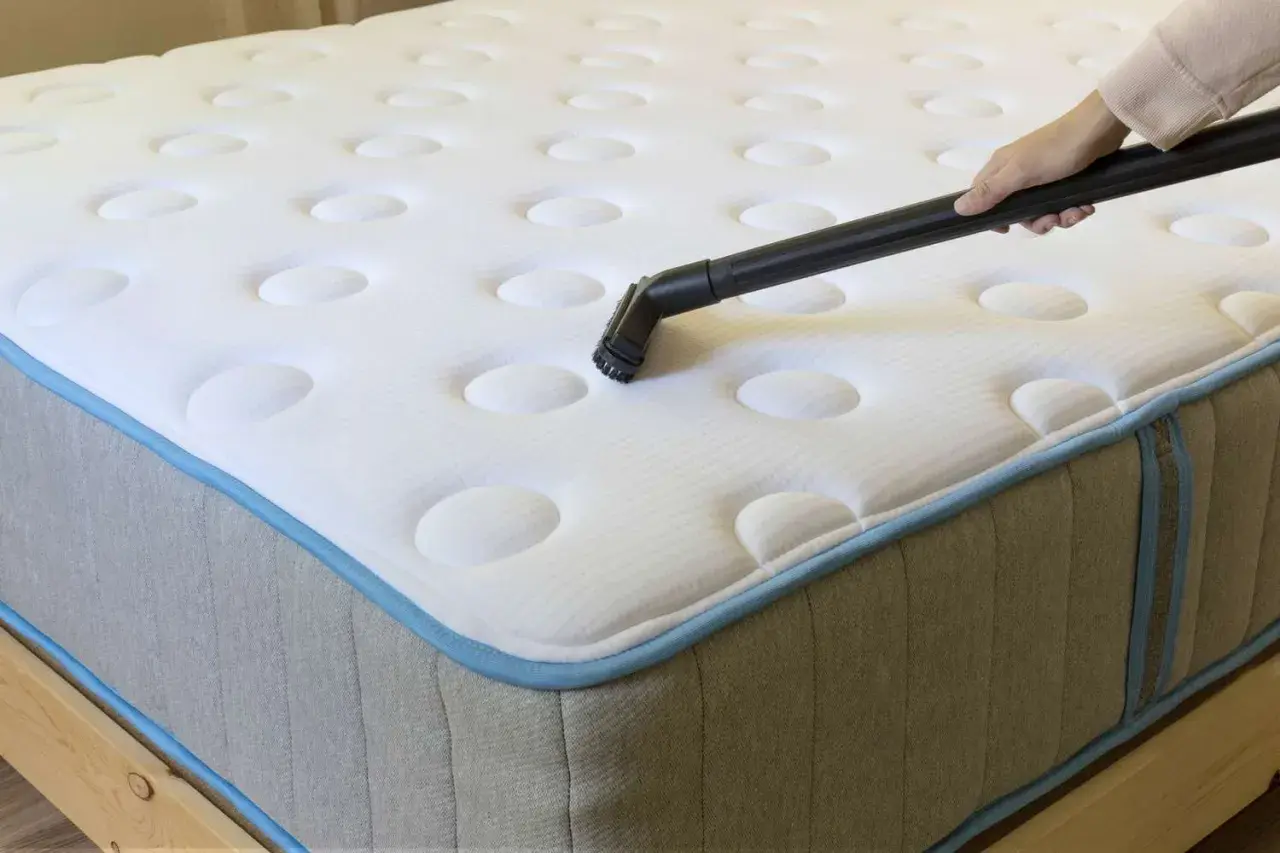
Dust mites settle where people spend the most time, and the mattress is usually the biggest reservoir in the bedroom. I focus on the bed first because heat, moisture, shed skin, and long contact time all line up there every night. This guide shows why mattresses attract dust mites, how to tell whether they are affecting sleep, and which practical steps actually reduce exposure in a typical American bedroom.
The fastest wins for a cleaner, lower-allergen bed
- Use a true allergen-proof encasement on the mattress, box spring, and pillows; a thin quilted protector is not the same thing.
- Wash bedding weekly in water at 130°F/54°C when the fabric allows, then dry it thoroughly.
- Keep bedroom humidity between 30% and 50% so the sleeping area is less friendly to mites.
- Vacuum the mattress and bed area with HEPA filtration to reduce surface dust without pushing it back into the room.
- Replace a mattress only when it is damaged, damp, moldy, or impossible to seal well; new alone does not solve the problem.
Why mattresses are such a good home for dust mites
Dust mites do not live there because a mattress is “dirty.” They live there because it is warm, slightly humid, and full of microscopic skin flakes, which are their food source. In allergy work, the mattress is a reservoir, which just means it stores allergen and keeps exposing you over time.
That is why the bed often matters more than the rest of the room. You spend hours in direct contact with it, and every turn in sleep can disturb whatever has collected in the fabric, seams, pillow, and comforter. Once you understand that, the usual symptoms become easier to read.
Signs your mattress is part of the problem
- You wake up congested, sneezing, or with itchy eyes and feel better later in the day.
- Symptoms are worse when you make the bed, strip the sheets, or lie down in a humid room.
- Nasal symptoms, coughing, or wheezing are strongest in the bedroom.
- Your asthma or eczema flares more at night or early in the morning.
- Dust mites do not bite, so if you have actual bite marks, I would think about bed bugs or another cause instead.
These clues are not a diagnosis, but they are enough to tell me where to start. If the pattern is tied to the bed, the next step is not panic cleaning; it is picking the few interventions that actually move exposure down.
What actually works better than spraying the mattress
I care less about quick fixes and more about barriers, laundering, and moisture control. That combination does the real work because it addresses the mattress itself, the bedding that sits on top of it, and the conditions that let mites thrive in the first place. One thing I tell readers often: a mattress protector for spills is not the same as an allergen encasement for mites.
| Method | What it does | How to use it | Main limitation |
|---|---|---|---|
| Allergen-proof encasement | Traps what is already in the mattress and blocks new allergen transfer | Cover the mattress, box spring, and pillows; keep the zipper fully closed | It is a barrier, not a cleaner |
| Hot washing | Removes mites and allergen from washable bedding | Wash sheets, pillowcases, and blankets weekly at 130°F/54°C when the label allows | Some comforters and specialty fabrics cannot handle high heat |
| Humidity control | Makes the bedroom less friendly to mites | Keep relative humidity around 30% to 50% | Seasonal humidity can undo the gains if you do not monitor it |
| HEPA vacuuming | Lifts dust from mattress seams and nearby surfaces | Vacuum the bed, frame, and floor with a HEPA filter | Useful only as part of a larger routine |
| Mattress replacement | Removes a damaged or moldy reservoir | Use it when the mattress cannot be cleaned or sealed well | Costly, and it does not work by itself |
Sprays, fragrances, and aggressive spot treatments are not where I would start. On a mattress, the biggest issue is usually the reservoir inside the fabric, not a surface stain you can mist away.
How to build a weekly bed routine that holds up in real life
The routine does not need to be elaborate. I usually think in layers: barrier, wash, moisture, vacuum, and clutter control. If you keep those five things steady, the mattress becomes much less likely to keep feeding symptoms.
- Wash the next-to-skin bedding every 7 days. That means sheets, pillowcases, and any washable blanket or cover you use nightly.
- Keep encasements on all the time. If you unzip them for “airing out” and forget to reseal them, you lose the main benefit.
- Track bedroom humidity. Relative humidity is just the amount of moisture in the air compared with what the air can hold, and that number should stay around 30% to 50%.
- Vacuum the bed area with a HEPA vacuum. HEPA means high-efficiency particulate air, which helps keep fine particles from blowing back into the room.
- Reduce soft reservoirs around the bed. Stuffed animals, heavy decorative pillows, and upholstered benches all store dust and make the room harder to keep under control.
In many US homes, summer humidity is the hardest part, especially in bedrooms that stay closed overnight. If you live in a humid climate, an air conditioner or dehumidifier is often more useful than another “deep clean” that you repeat every weekend.
When a mattress needs more than cleaning
I would replace a mattress if it is damp, smells musty, has visible mold, has a broken cover, or is so worn that an encasement cannot seal it properly. At that point, cleaning becomes a poor investment because the mattress is no longer just a reservoir; it has become a structural problem.
Even then, I would not assume a new mattress solves everything. If the room still sits above 50% humidity, if the pillows and comforter stay unprotected, or if the bedroom is full of dust-collecting fabric, the symptoms often come back. When that happens, the mattress is only part of the picture, and an allergist can help sort out whether dust mites, mold, pet dander, or something else is driving the reaction.
The four-step reset I would start with this week
- Put allergen-proof encasements on the mattress, box spring, and pillows.
- Wash all washable bedding in hot water once a week and dry it thoroughly.
- Check bedroom humidity and keep it in the 30% to 50% range.
- Vacuum the mattress seams and surrounding floor with HEPA filtration once a week, then remove extra fabric clutter from the room.
That is the smallest routine I know that still does real work for dust mites in mattresses. If you keep it consistent, the bed stops being the main allergen reservoir and starts behaving like a normal part of the room, which is exactly where better sleep begins.